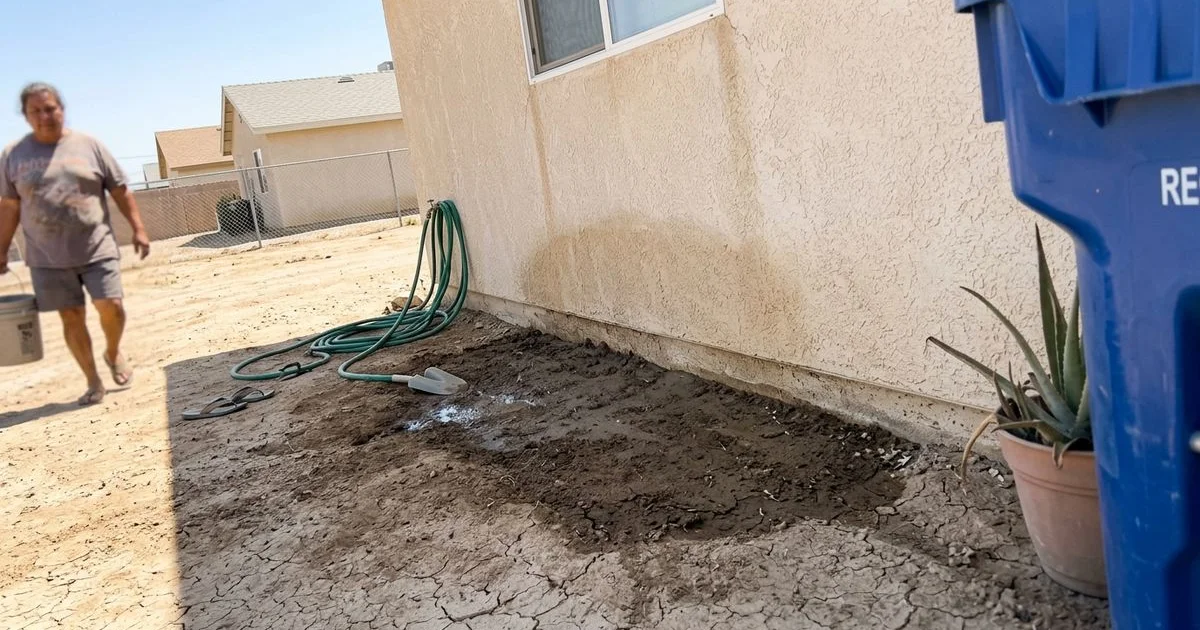
A broken drain line under a concrete slab is different from a supply-side slab leak. It is not pressurized, so it will not hiss or spray. It leaks wastewater slowly into the soil and lets gas and pests in. The signs build gradually, which is why it is often treated as a string of separate small problems until someone puts a camera in the line.
Seven signs, with urgency
| # | Sign | What it suggests | Urgency |
|---|---|---|---|
| 1 | Drains slow again within weeks of clearing | A break or offset is catching waste | Schedule a camera |
| 2 | Gurgling in a tub when the toilet flushes | Air moving through a damaged shared line | Schedule a camera |
| 3 | Sewer odor indoors with traps full | Gas escaping through soil at the slab | Soon |
| 4 | Damp or soft soil along the foundation in dry weather | Wastewater saturating the ground | Soon |
| 5 | Small flies near drains or baseboards | Sewer flies breed in contaminated soil and sludge | Soon |
| 6 | New cracks in tile, grout, or slab | Soil under the floor may be washing out | Promptly |
| 7 | A soft, sunken, or warm spot in the floor | Advanced soil loss | Call now |
Signs 1 and 2 together are the most common early pattern. Add sign 3 or 4, and the case for a broken line is strong.
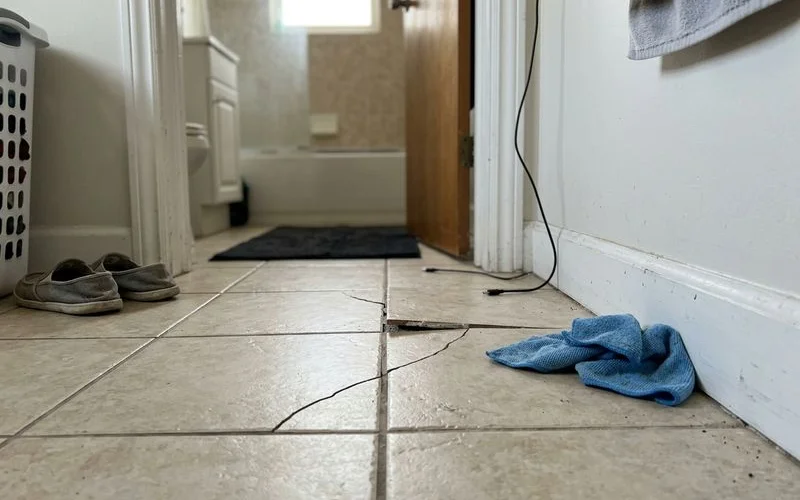
Sewer break or supply leak?
They are often confused because both happen under the slab.
| Broken drain (sewer) | Supply slab leak | |
|---|---|---|
| Pressure | None, gravity flow | Pressurized |
| Main clue | Odor, repeat clogs, damp soil | Warm spot, jumped water bill, running sound |
| Water meter moves with taps off? | No | Yes |
| Pests | Sewer flies, sometimes roaches | Rare |
| Confirmed by | Sewer camera | Pressure test, acoustic and thermal locating |
If you are seeing a warm floor and a moving meter, that is the supply side. Our leak detection and slab leak repair page covers it.
Why these lines fail here
Older homes. Many older homes near downtown still have original cast iron under the slab. Cast iron corrodes from the inside, the pipe wall thins, and eventually it cracks or splits along the bottom where wastewater runs.
Ground movement. Near irrigated farmland and in yards with heavy watering, soil gets wet and dry repeatedly. That movement presses on rigid pipe. Joints pull apart into offsets, and sections can sag into bellies.
Hard water and grease. Scale and grease build up inside drain lines over time, narrowing the pipe and giving waste more places to catch near any crack or offset.
Local expert insight
In a home that sat empty all summer, the first sign is often a strong odor when the owner returns. Refill every trap first. If the smell stays once all the traps hold water, think about the drain line under the slab.
How it gets confirmed
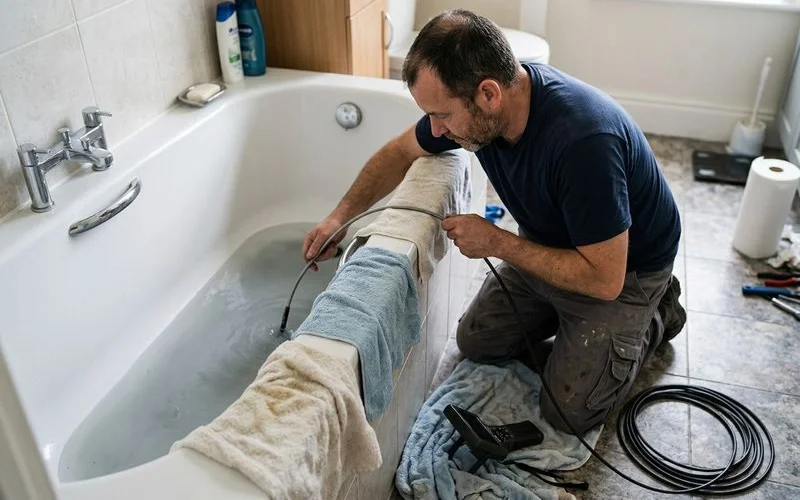
- Clear the line if needed so the camera can travel.
- Run the camera from the cleanout and watch the live video for cracks, offsets, bellies, or collapse.
- Locate from the surface. A transmitter in the camera head is tracked from above, and the spot is marked on the floor or outside wall, with depth.
- Smoke test if needed, to confirm where gas reaches the living space.
Our guide on what a sewer camera inspection finds shows what each problem looks like on screen.
Repair paths
- Spot repair: open the slab at the marked point, replace the damaged section, patch the concrete. Best when damage is in one place.
- Lining: a resin liner cures inside the existing pipe and creates a new pipe within the old one. Works when the pipe is cracked but still in line.
- Reroute: abandon the run under the slab and route a new drain another way. Useful when the old line has problems along its whole length.
What does not work is clearing the same drain every few months while wastewater keeps soaking the soil under your floor. Book a camera through our drain cleaning service. Yuma Plumbing Pros answers 24/7 in English or Spanish, and you can request a free estimate. Ask about any service call fee before booking.