Water heaters across the country are rated to last somewhere around ten years or more. Around here, plenty of them do not get close. The reason is not bad luck or bad brands. It is what flows through them every day, combined with where they sit and how hot it gets.
Water heater repair in Yuma works best when the plumber starts by asking why the unit is struggling, not just which part is broken. Gas, electric, or tankless, the service covers thermostats, heating elements, pilot and gas control problems, anode rods, tank flushing, tankless descaling, and full replacement when that is the honest answer. Calls to Yuma Plumbing Pros are answered around the clock in English or Spanish and routed to a local plumber.
Why Heaters Wear Out Early in Yuma
The City of Yuma blends treated Colorado River water with groundwater and rates the result at 18 to 22 grains per gallon. Anything over about 10.5 is considered very hard, so local water sits at roughly double that line.
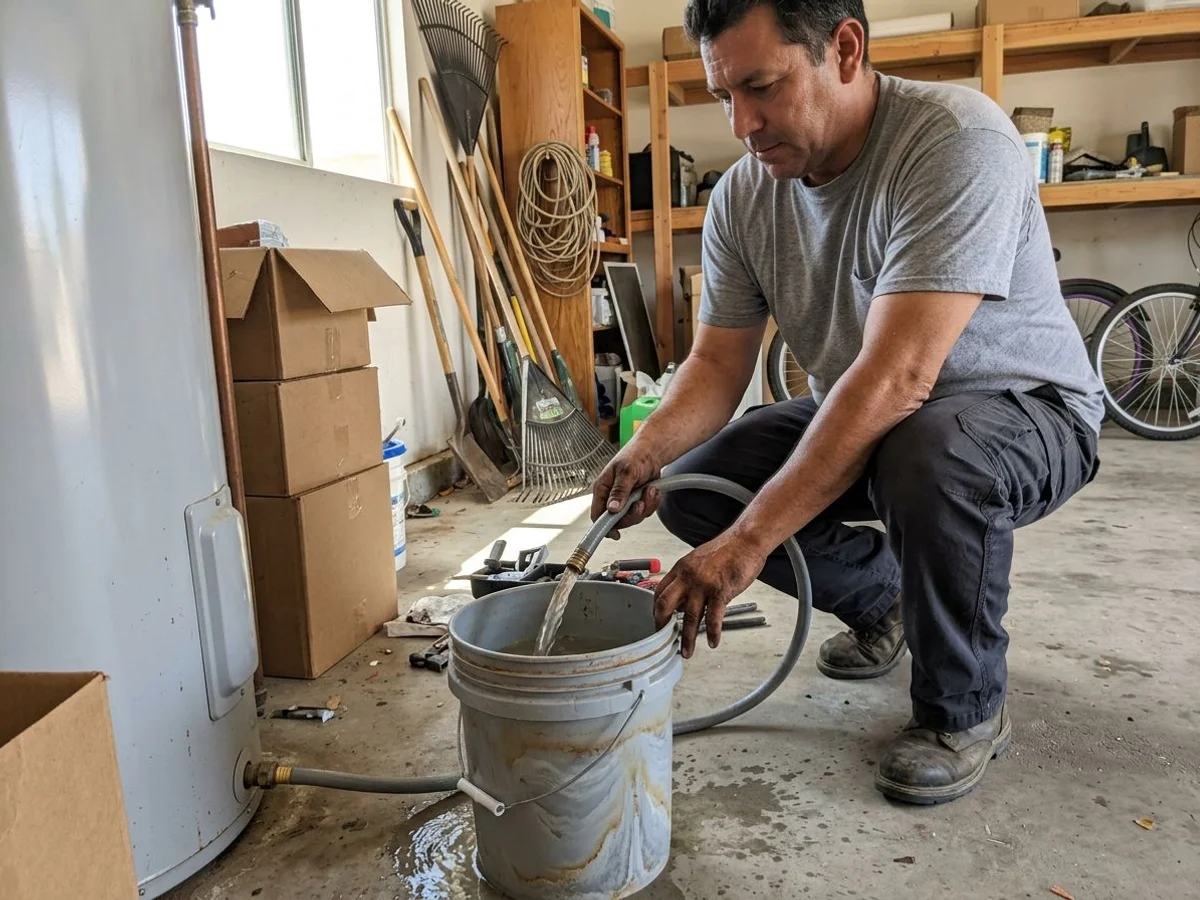
Each time the tank heats, calcium and magnesium come out of solution and settle on the bottom. That layer acts like insulation between the burner or lower element and the water. Burn cycles run longer, energy use climbs, recovery slows, and the steel at the bottom of the tank overheats and corrodes faster.
Then there is the heat. Many heaters sit in garages or on exterior walls that stay well above 100 degrees for months. Incoming supply water stays warm through the summer, so equipment that would coast in a mild climate gets pushed year round. Put those together and an early failure is the expected outcome, not a surprise.
Listen to the Tank: Symptoms and Likely Causes
- Popping, crackling, or rumbling. Water trapped under sediment flashes to steam. This is a heavy scale layer announcing itself.
- Hot water runs out sooner than it used to. Sediment is taking up tank volume, the burner is struggling through scale, or the dip tube has failed and cold water is mixing at the top.
- Rusty water from the hot side only. The anode rod is likely spent and the tank is corroding internally. Treat this as a late warning.
- No hot water at all. On gas units, a pilot, thermocouple, or gas control issue. On electric units, a tripped high-limit switch, a burned element, or a failed thermostat. These are often repairs, not replacements.
- Moisture at the base. Could be a loose fitting, a relief valve doing its job, or a tank that has started to fail. It needs testing before anyone condemns the heater.
- Tankless error codes. Scale-related codes on brands like Rinnai or Navien usually mean the heat exchanger is choking and overdue for descaling.
Repair or Replace? How the Call Gets Made
| Condition | Usual Recommendation |
|---|---|
| Younger unit, failed element, thermostat, or thermocouple | Repair the part |
| Popping tank with moderate scale, no leaks | Flush and check the anode |
| Rust in hot water and a spent anode on an older tank | Plan a replacement soon |
| Water seeping from the tank body | Replace |
| Tankless unit throwing scale codes | Descale and set a maintenance schedule |
You should see the condition for yourself: the sediment that comes out in a flush, the state of the anode rod, the corrosion at the fittings. Request a free estimate and ask about any service call fee before booking.
Tankless Units Need a Different Maintenance Calendar
Tankless heaters are efficient and long-lived when cared for, but they are unforgiving in hard water. Water passes through narrow heat exchanger passages at high temperature, exactly where scale forms fastest. Manufacturer intervals are written for average water, and local water is far from average.
Most tankless units here need descaling at least annually, and heavy-use homes may need it every six months. The process circulates a descaling solution through the heat exchanger with a small pump, then flushes and cleans the inlet screen. Units installed without any water treatment, which is common in newer subdivisions such as Cielo Verde, tend to show trouble within a few years if nobody has been told about this schedule.
Seasonal Tips for Garage and Exterior Units
- Before summer: Flush the tank and test the relief valve. A heater already fighting scale handles a 110 degree garage poorly.
- If you leave for the season: Close the cold supply, set gas units to vacation or pilot, or switch electric units off at the breaker.
- When you return in the fall: Look for moisture or rust at the base before restarting, and listen for popping during the first heat cycle.
- Every few years: Pull and check the anode rod. Replacing a spent rod is one of the cheapest ways to extend tank life.
What a Proper Replacement Includes
When replacement is the right call, sizing matters more than the brand on the box. Capacity gets matched to how many showers run back to back, whether laundry and the dishwasher overlap, and the recovery loss scale causes over time.
- A permit: The City of Yuma requires one for water heater replacement.
- Thermal expansion control: An expansion tank where the system is closed, so pressure has somewhere to go.
- Correct relief valve discharge: Piped to an approved location, not left pointing at the floor.
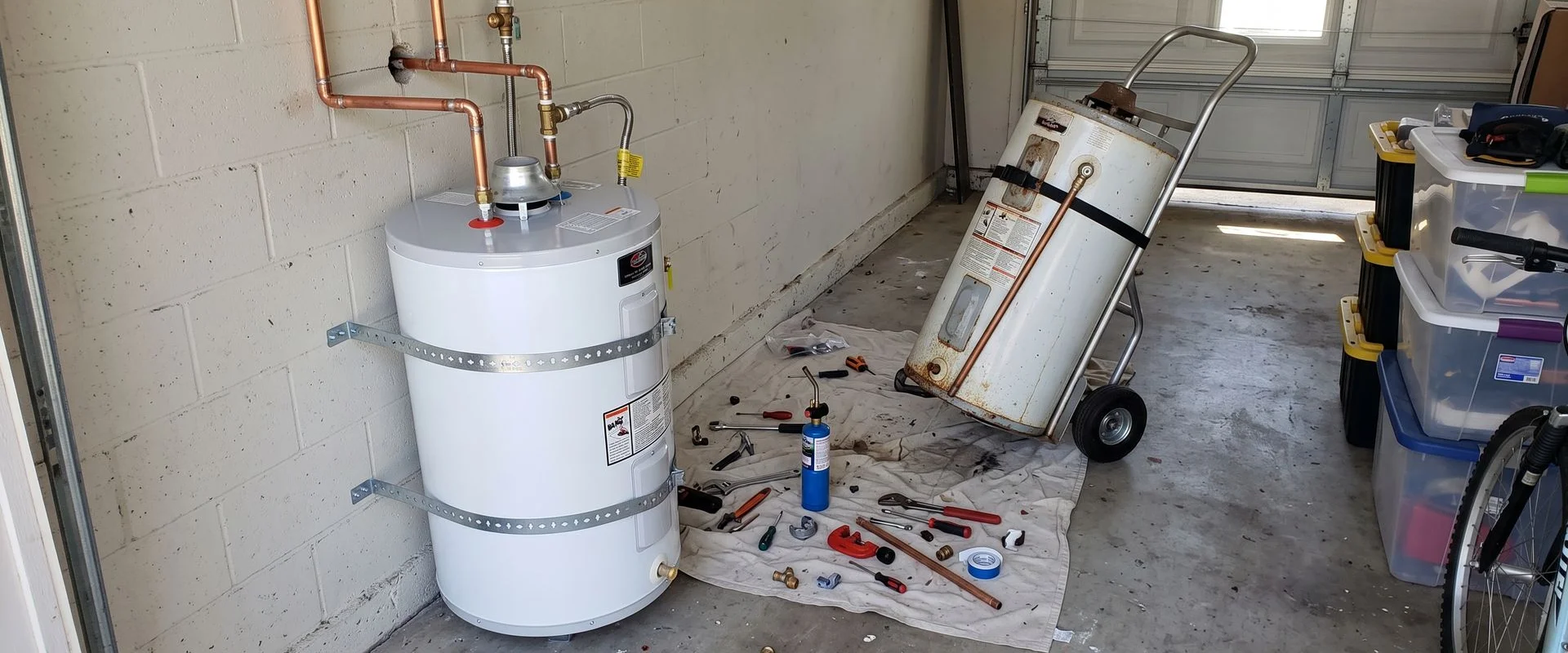
- Venting and connections: Proper flue for gas units, new flex connectors, and secure strapping.
- Haul-away: The old unit leaves with the plumber.
After the install, a flushing and anode schedule keeps the new heater from following the old one. If untreated water is what wore out the last unit, a softener upstream is worth discussing. Our water heater guides explain the failure process in more detail.
Water heater service is available throughout Yuma, the Foothills, Somerton, San Luis, and Wellton. If a tank is leaking right now, shut off the cold supply and the gas or power, then call.