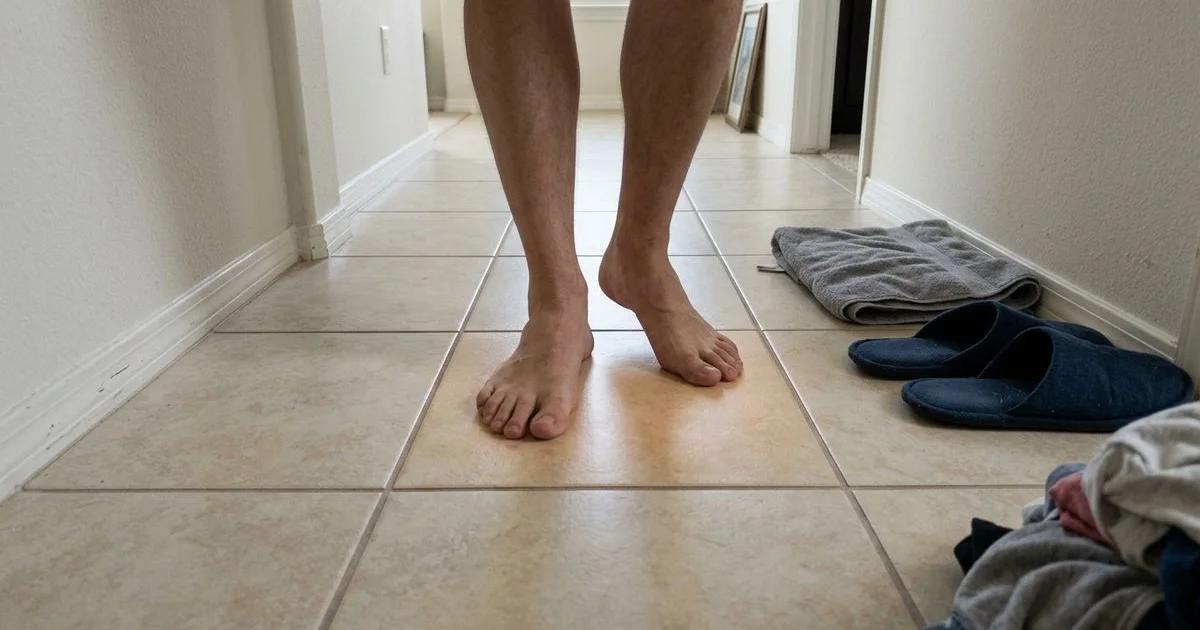
A slab leak is a pressurized water line leaking under the concrete floor of your house. You cannot see it, and in a dry climate you often cannot smell it either. Most Yuma homes are single-story on a slab, with supply lines running underneath, so this is a common call here.
This guide lists the signs from most urgent to least, explains the test anyone can do, and covers what happens next.
Signs ranked by urgency
| Sign | What it usually means | Urgency |
|---|---|---|
| Water coming up through the floor or at a wall base | A large leak has saturated the soil and found a path up | Call now. Shut the main. |
| New cracks in tile or slab alongside other signs | Water may be washing soil out from under the floor | Call now |
| Warm spot on the floor with no heat source | Hot water line leaking under that area | Call today |
| Running or hissing sound with every fixture off | Water moving somewhere it should not | Call today |
| Meter dial moving with everything off | Confirmed leak somewhere past the meter | Call today |
| Water bill jumped with no change in use | Water is leaving the system | Test this week |
| Damp carpet, swollen baseboard, musty smell at a wall base | Water wicking up from below | Test this week |
| Damp soil against the foundation in dry weather | Possible leak near the exterior | Test this week |
| Lower water pressure combined with any of the above | A significant leak is pulling flow | Raise urgency |
One sign alone may have another explanation. Two or more together, especially with a moving meter, is a strong case.
The five-minute meter test
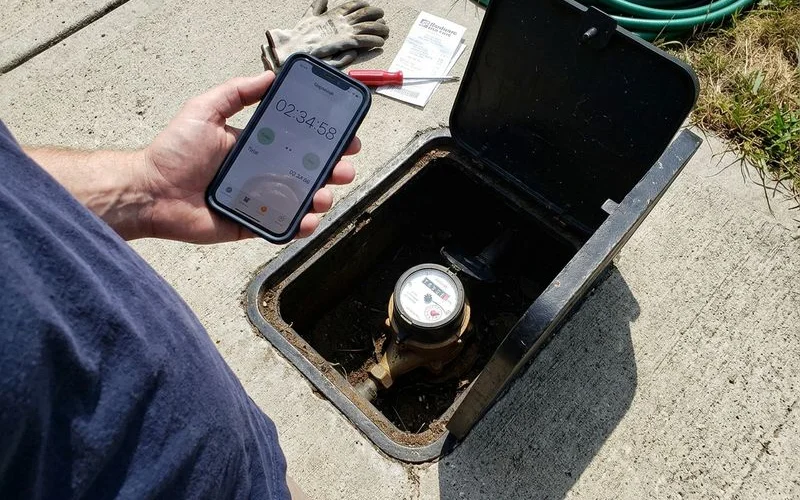
- Turn off every water use: taps, dishwasher, washing machine, ice maker, irrigation, evaporative cooler supply, and softener regeneration.
- Open the meter box at the curb. Find the low-flow indicator, a small triangle, star, or dial that spins with even tiny flow.
- Watch it for two or three minutes. If it moves, water is leaving the system.
- Now close the main shutoff at the house and check again. Still moving? The leak is between the meter and the house. Stopped? The leak is inside the house, which includes under the slab.
That test moves you from “maybe” to “where.”
Why slab leaks happen here
Soil movement. Irrigated farmland around the valley and seasonal watering cycles mean the ground under some homes gets wet and dry repeatedly. That movement puts stress on lines cast under the concrete. If cracks in the floor are part of your situation, read slab leak vs shifting soil to sort out which one is driving the other.
Hard water on copper. Decades of 18 to 22 grain water moving through copper supply lines can wear pinholes from the inside. Once one pinhole appears, others in the same run often follow.
Hot lines fail more. Heat speeds up corrosion, and hot lines expand and contract against their bedding with every use. That is why the warm-floor symptom is so common.
The empty-house problem
In a winter home that sits closed from spring to fall, a slab leak can run the entire summer. Owners often learn about it from a water bill or a neighbor. Close the main before you leave, and do the meter test as soon as you return.
How a professional finds it
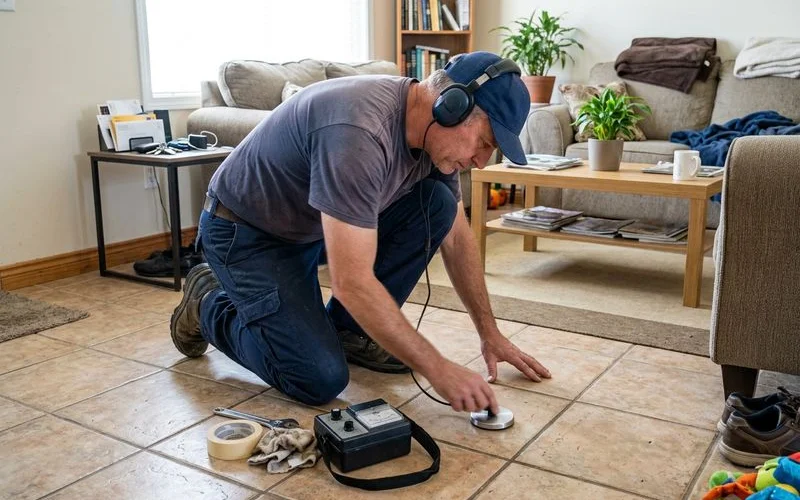
- Isolation and pressure testing confirms the leak and separates hot from cold.
- Acoustic listening picks up the sound of pressurized water escaping through concrete and soil.
- Thermal imaging shows the heat pattern of a hot-side leak.
- Line tracing maps where the pipe actually runs, so listening happens in the right places.
The concrete is opened only at the located spot. Depending on the line and the house, the fix may be a spot repair through the slab or rerouting the line through walls or the attic instead. In the City of Yuma, any new copper under a slab must be sleeved, which is one reason reroutes and PEX are common.
What to do right now
If the meter test shows movement, shut the main between uses and request leak detection and slab leak repair. Do not start breaking tile to look.
Yuma Plumbing Pros answers every call 24/7 in English or Spanish. The assistant takes down what you are seeing and sends it to a local plumber. Request a free estimate, and ask about any service call fee before booking.