Water heaters rarely fail without warning. They tend to give months of signs first. The trouble is that each sign seems minor on its own: a shorter shower, an odd noise, a damp spot you wipe up. In Yuma, where hard water and heat wear tanks out early, it pays to know which ones to act on.
Six signs, ranked by urgency
1. Water coming from the tank itself. Act now.
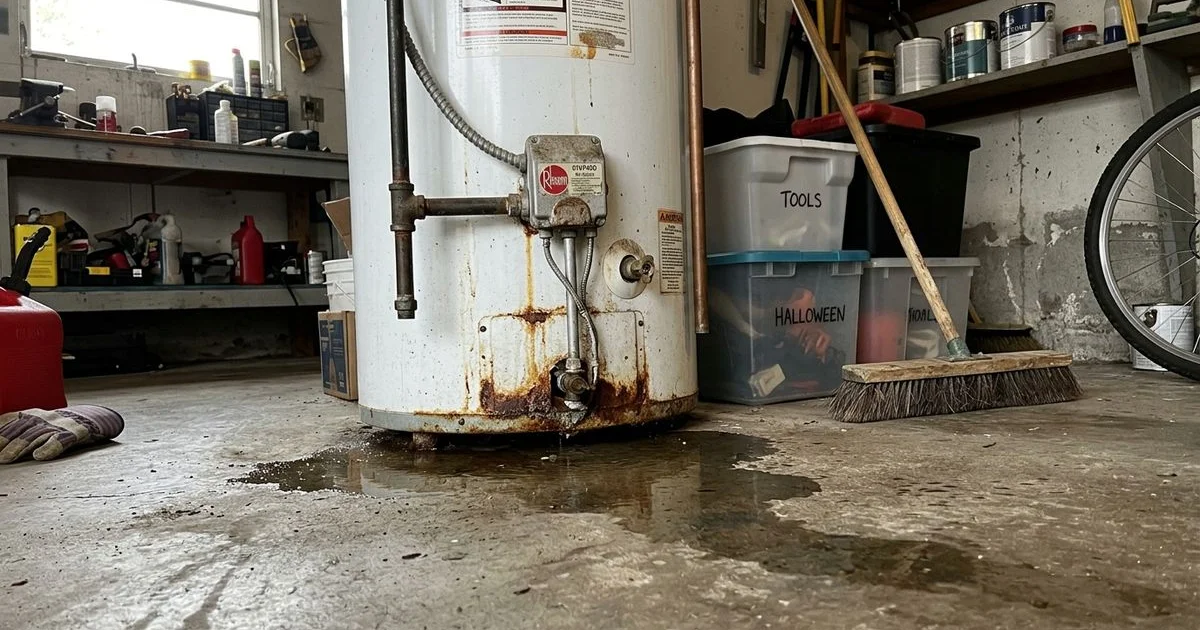
Moisture at the base could come from a fitting, the relief valve line, or condensation, and all of those can be fixed. But if water is coming from the tank shell or bottom seam, the steel has corroded through. It will not get better and can let go all at once.
Do this now: close the cold inlet valve above the heater, turn the gas to off or flip the breaker, and call.
2. Rust in the hot water only. Act this week.
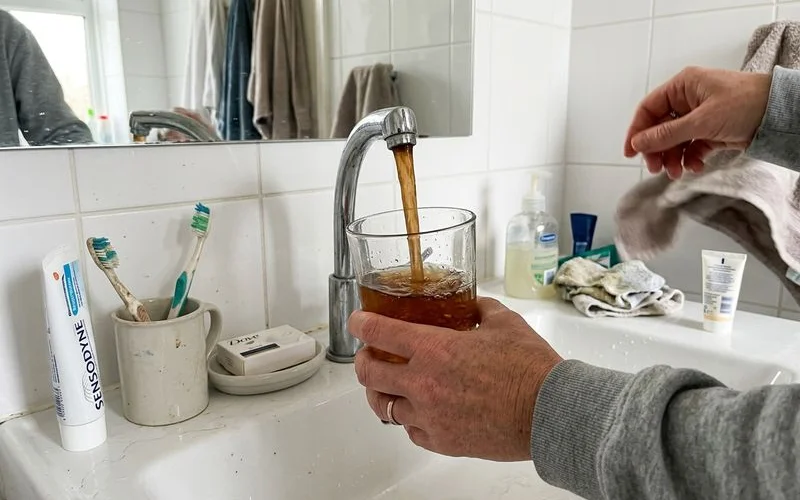
Run cold water into a white cup, then hot. If the cold is clear and the hot is tinted, the rust is coming from inside the tank. That usually means the anode rod is used up and the steel is corroding. On an older tank, this is a replacement-planning signal.
3. Popping or rumbling during a heat cycle. Schedule service.
That noise is water trapped under scale on the tank bottom, flashing to steam and bursting through the crust. At 18 to 22 grains per gallon, a tank can build a heavy layer within a few years. Caught early, a flush often helps.
4. Running out of hot water sooner. Schedule service.
Sediment takes up space in the tank and insulates the burner, so recovery slows. Rule out a broken dip tube too. It sends cold water straight to the outlet, mimics a dying tank, and is a much cheaper repair.
5. A gas bill creeping up with no change in use. Monitor.
A burner heating through scale runs longer to deliver the same hot water. It is easy to miss, but it often shows up before the other signs.
6. Age past the rated life. Plan ahead.
Age alone is not a reason to replace a working heater. But once it is at or past its rated life, every other sign on this list carries more weight.
Find your heater’s age
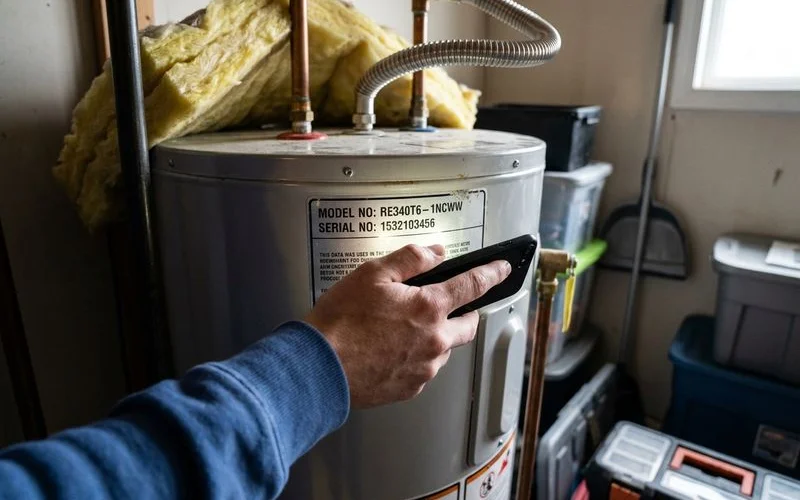
The data plate on the side of the tank lists the serial number, and most brands encode the build month and year in it. If the format is not obvious, read it out when you call, and the details can be passed to the plumber.
Why local tanks age faster
Manufacturer life ratings assume average water and regular maintenance. Yuma city water runs at about twice the very-hard threshold, and many heaters sit in garages that pass 110 degrees in summer. An unflushed tank here commonly falls short of its label.
Signs that usually mean a repair, not a new tank
| Symptom | Gas heater, likely cause | Electric heater, likely cause |
|---|---|---|
| No hot water, no leak | Pilot, thermocouple, or gas control | Tripped high-limit, failed element, or thermostat |
| Temperature swings | Thermostat or sediment | Thermostat or lower element |
| Pilot will not stay lit | Thermocouple or thermopile | Not applicable |
| Drip from the relief valve pipe | Failed valve or high system pressure | Same |
A dripping relief valve matters. It is a safety device. A failing valve or excess pressure, which sometimes needs an expansion tank, should be fixed promptly, not capped.
What to do next
- Leak from the tank: shut off the water and fuel or power, then call.
- Rust, noise, or shorter hot water: schedule a flush and anode check, and get an honest read on remaining life.
- Replacing anyway: plan the timing yourself instead of waiting for a weekend failure. Consider water treatment so the new tank does not start the same cycle over. In the City of Yuma, water heater replacement requires a permit.
Our water heater repair service covers gas, electric, and tankless units, and our guide to repair vs replacement walks through the decision. Call Yuma Plumbing Pros any hour, in English or Spanish, and request a free estimate. Ask about any service call fee before booking.