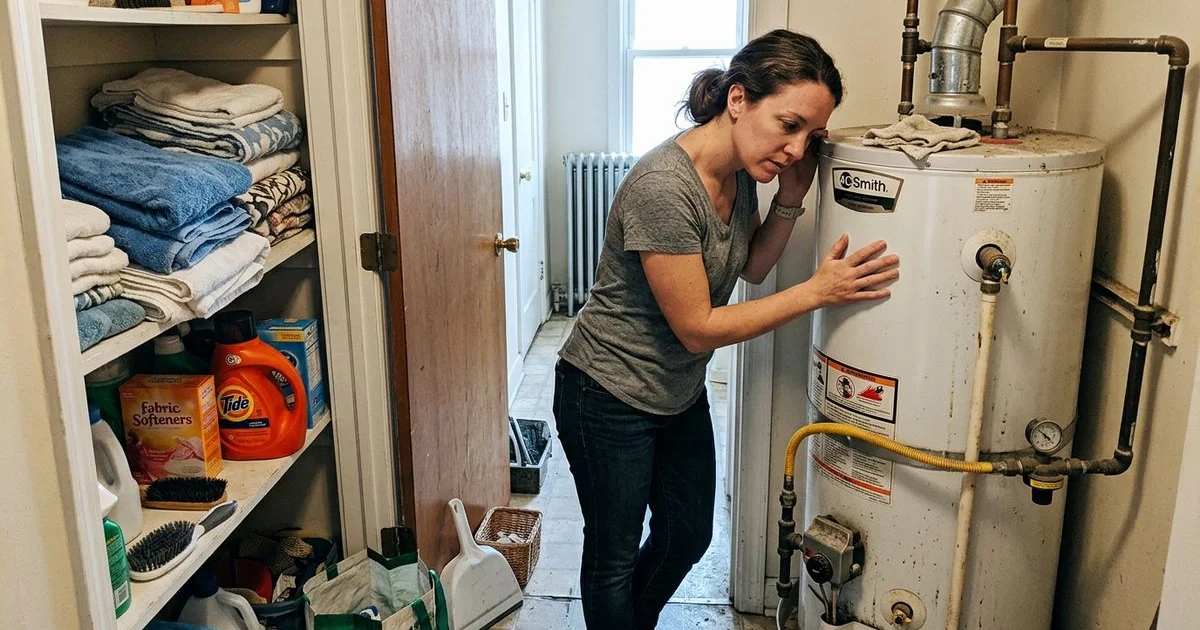
It sounds like popcorn, or a coffee percolator, or gravel shifting in the garage. It happens when the burner kicks on and fades when it shuts off. If your water heater makes that noise, you are hearing scale, and on Yuma water it can start much earlier in a heater’s life than most people expect.
A guide to water heater noises
Not every sound means the same thing. Match what you hear:
| Sound | When it happens | Most likely cause | Concern level |
|---|---|---|---|
| Popping, crackling | While the burner or element is heating | Water trapped under scale flashing to steam | Schedule a flush |
| Low rumble | During long heat cycles | Heavy sediment layer, hardened deposits shifting | Schedule soon |
| Hissing or sizzling (gas unit) | While burning | Water dripping onto the burner: condensation or a leak | Check for moisture now |
| High whistle or hiss from the relief valve | Any time | Relief valve releasing pressure or temperature | Call promptly |
| Screech or squeal | When water is running | A partly closed valve restricting flow | Check the inlet valve |
| Ticking or tapping | As pipes heat and cool | Normal pipe expansion | Usually nothing |
| Hum (electric unit) | While heating | Element vibration | Usually minor |
Sediment popping is easy to recognize once you know it: irregular, percussive, and only while the heater is firing.
What is actually happening in the tank
- Hard water enters the tank and is heated.
- Heat forces calcium and magnesium out of solution.
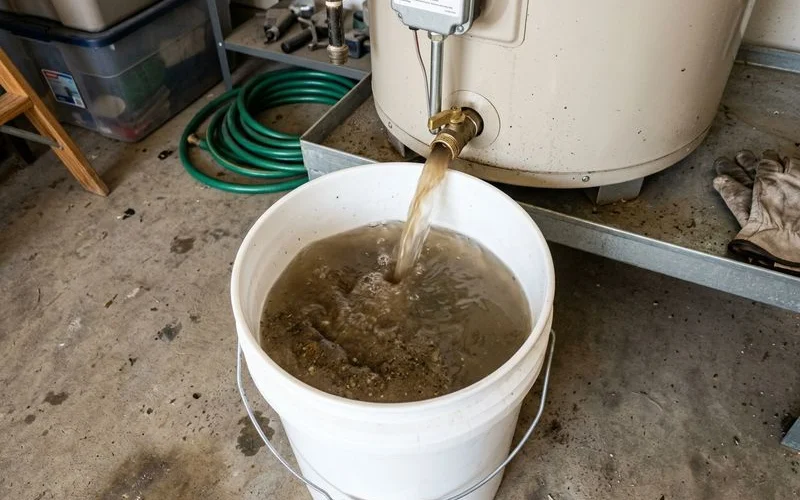
- The minerals settle on the tank bottom, right over the burner or around the lower element.
- Over months, the loose sediment hardens into a crust.
- Small pockets of water get trapped between the crust and the steel.
- When heat is applied, the trapped water boils and bursts up through the crust. That is the pop.
A clean tank does not make this noise. A noisy tank is telling you the layer has real depth.
Why tanks in Yuma get loud early
The City of Yuma rates its water at 18 to 22 grains per gallon, about double the very-hard threshold. Every heat cycle drops more mineral than the same cycle would in most of the country. A tank that might take five or six years to build a noticeable layer elsewhere can get there in two or three here.
Summer makes it worse. Supply water runs warm for months, which puts it closer to the point where minerals drop out before it even reaches the heater, and garages pass 110 degrees. For the full picture, see why water heaters fail early here.
What happens if you ignore it
- The tank bottom overheats. Scale insulates the steel from the water, so heat builds up in the metal.
- Corrosion speeds up. Hot steel corrodes faster, from the inside where you cannot see it.
- Energy use climbs. Longer burn cycles to heat the same water.
- Hot water runs out sooner. Sediment takes space and slows recovery.
The endpoint
A popping heater that is ignored does not stay a noisy heater. It becomes a leaking one, usually at the bottom seam, usually with little warning, and usually onto a garage floor with boxes on it.
Flush or replace?
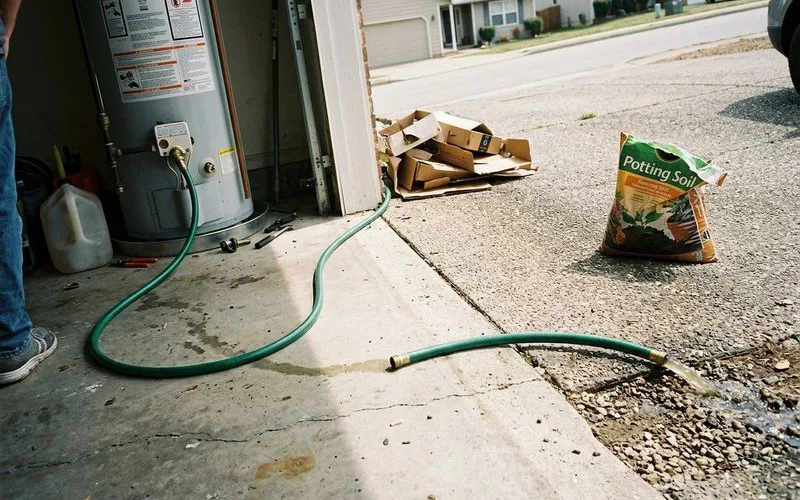
A flush likely helps when: the heater is reasonably young, the noise is recent, the hot water runs clear, and there is no moisture at the base. Draining out loose sediment before it hardens often quiets the tank and restores recovery.
A flush helps less when: the tank has gone many years without service. Hardened scale may not pass through the drain valve, and the valve itself may clog. It is still worth trying, but go in with realistic expectations.
It is time to plan a replacement when: the heater is past its rated life, the hot water runs rusty, the drain valve is packed solid with mineral, or there is moisture at the base.
While the tank is drained, it is the right time to pull and check the anode rod. A spent rod means the steel is unprotected, and replacing it on a tank with life left is cheap insurance.
Set up a yearly routine
On this water, an annual flush and an anode check every two to three years are what get a tank close to its rated life. Our water heater repair service handles both on one visit. Call Yuma Plumbing Pros any hour, in English or Spanish, request a free estimate, and ask about any service call fee before booking.