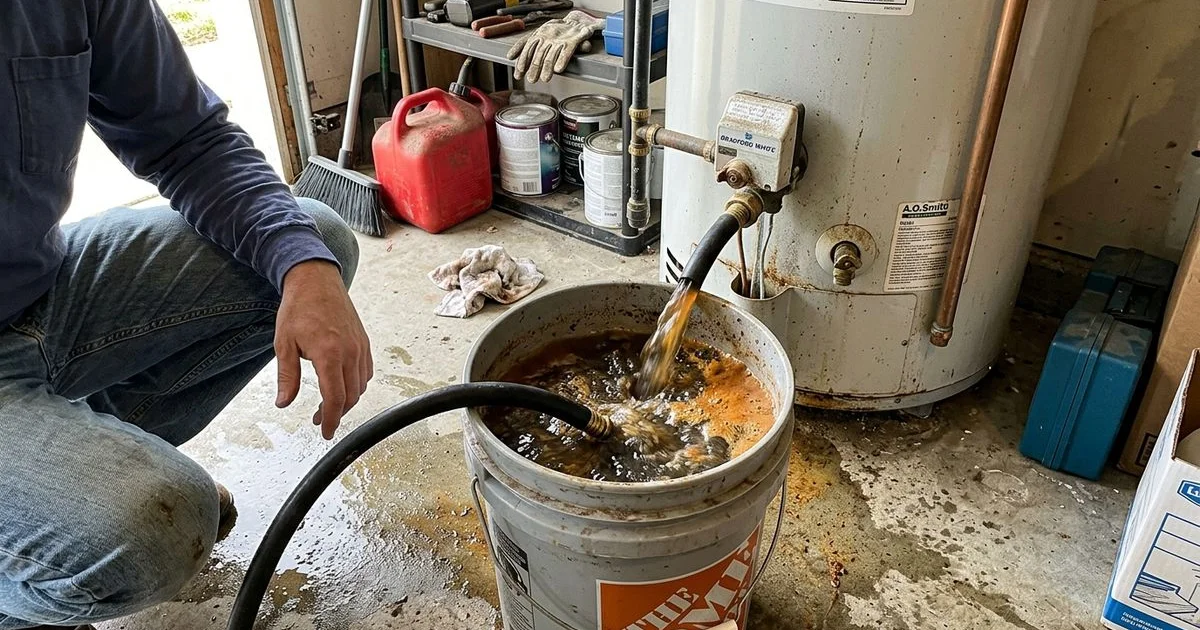
Ask around Yuma and you will hear the same story: the water heater was only five or six years old when it started leaking. That is not bad luck or a bad brand. It is the predictable result of three local conditions working on the tank together.
Condition 1: Very hard water
The City of Yuma rates its water at 18 to 22 grains per gallon. Water above 10.5 grains is classed as very hard, so the city supply runs at roughly twice that.
Here is what that does inside a tank:
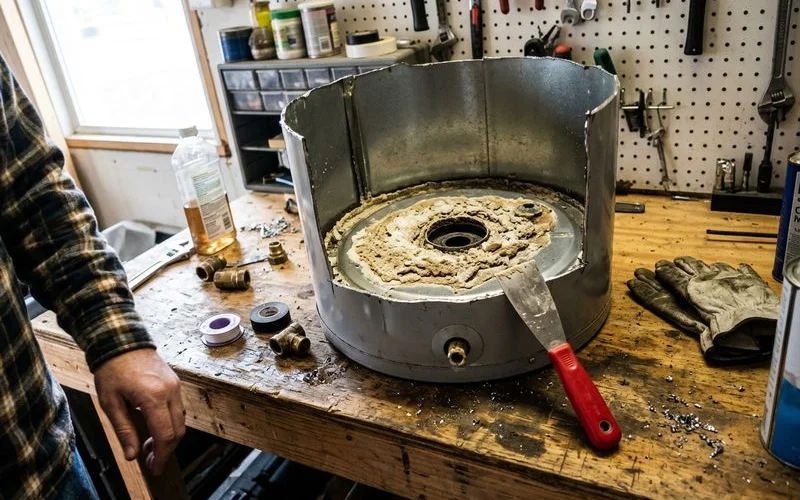
- Minerals drop out. Heat forces calcium and magnesium out of the water, and they settle on the tank bottom, right over the burner in a gas unit or around the lower element in an electric one.
- Sediment hardens. Over months the loose layer bakes into a crust.
- The burner heats rock instead of water. Scale insulates the steel from the water, so heat builds up in the metal.
- Recovery slows and burn time grows. You run out of hot water sooner and the gas bill creeps up.
- The steel overheats and corrodes. Hot steel corrodes much faster, from the inside where nobody sees it.
- The tank leaks, usually at the bottom seam, often with little warning.
That chain is the main reason heaters here fail early.
Condition 2: Heat
Summers here run past 110 degrees for long stretches, and the water coming into the house stays warm for months. That matters in two ways:
- Warm water is closer to dropping its minerals. Scale forms faster when the incoming water is already warm.
- Garages bake. A heater in a garage that tops 110 degrees keeps cycling against daily demand with no cool-down season. Heat pump water heaters also lose efficiency when the space around them gets that hot.
Condition 3: Long idle stretches
This one is specific to a winter-visitor town. Many homes sit empty from spring to fall.
| What the owner does | What happens to the heater |
|---|---|
| Leaves it on, normal setting | Keeps a full tank hot all summer for nobody, in a hot garage |
| Turns it off, tank stays full | Hard water sits for months; sediment settles and crusts, and the drain valve can stick |
| Sets it to vacation mode | Best of the three: low heat, minimal cycling |
Whichever you choose, flush the tank when you return. It is also the right time to check for leaks before you settle back in.
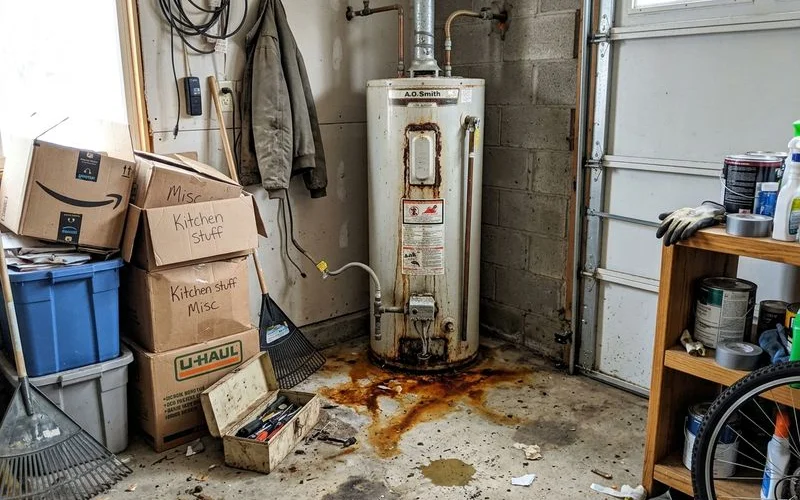
The warning signs, in the order they usually show up
- Popping or rumbling during heat cycles: water trapped under scale flashing to steam. Our guide on water heater popping and rumbling sounds explains it.
- Running out of hot water sooner. Sediment takes up space and slows recovery. Rule out a broken dip tube too.
- A gas or electric bill creeping up with no change in use.
- Rust in the hot water only, a sign the anode is spent and the tank is corroding.
- Moisture at the base. Could be a fitting or the relief valve, which are repairable. Could be the tank, which is not.
What “rated life” assumes
The life on the label assumes average water and routine maintenance. Neither is automatic here. On this water, without flushing, the clock runs faster.
Three habits that close the gap
| Habit | How often | Why it works |
|---|---|---|
| Flush the tank | Every year | Removes sediment before it hardens into a fixed layer |
| Check the anode rod | Every 2 to 3 years | A spent rod leaves the steel unprotected |
| Treat the water upstream | Ongoing | A softener removes hardness before it reaches the tank |
Tankless owners have their own version: descale on a schedule set for this water, not the national manual.
When a heater does need replacing, size it to your household. An undersized tank cycles harder and scales faster. In the City of Yuma, replacement requires a permit, so ask whether it is included in the estimate.
Where to start
Our water heater repair and replacement service covers flushes, anode service, repairs, and replacement. For the root cause, see water softeners and reverse osmosis. Call Yuma Plumbing Pros at any hour, in English or Spanish, request a free estimate, and ask about any service call fee before booking.